History of Devanahalli

Devanahalli is one of North Bangalore's deepest historical towns. The arc runs from a 15th-century Kancheepuram-refugee settlement, through Malla Baire Gowda's 1501 mud fort, the Mysore Dalwais and Tipu Sultan reinforcement era, Lord Cornwallis's 1791 siege, the long agrarian and pomelo-growing centuries, and finally the post-2008 transformation triggered by Kempegowda International Airport. Today the corridor is one of India's biggest aerospace, IT and airport hubs — and Bulwark The Woodland Forest at Vijayapura is the next chapter of the Devanahalli story, a 53-acre plotted township that ties the historical depth of the corridor to its 2026-onwards plotted residential demand.
15th Century — Origins from Kancheepuram
The history of the Devanahalli area dates to the 15th century. According to local oral history, a group of refugees from Kancheepuram (Tamil Nadu), led by Rana Baire Gowda, settled in the Avati region following a dream. The settlement laid the foundations for what would later become Devanahalli — a name derived from "Devanadoddi" (the settlement of the gods). The Baire Gowda clan would shape the town's identity over multiple generations.
1501 — The Mud Fort
In 1501, Rana Baire Gowda's son Malla Baire Gowda — a chieftain operating under the Vijayanagara Empire — received imperial permission to construct the initial mud fort. The fort was built in the settlement of Devanadoddi (modern Devanahalli). The mud fort was a defensive structure for the local agrarian and pomelo-growing settlement and a small administrative anchor for the broader Vijayanagara empire's northern Karnataka frontier.
1749 — Mysore Dalwais Take the Fort
The fort was later invaded and occupied by the Mysore Dalwais in 1749. Control then transitioned to the rising Mysore power — first Hyder Ali and then his son Tipu Sultan. The Mysore rulers expanded and reinforced the fort with stone, replacing the earlier mud walls. The 20-acre granite-walled fortress with 12 semi-circular bastions, the intricate archways, and the strategic placement of the Venugopala Swamy Temple inside the fort all date primarily to this Hyder Ali–Tipu Sultan reinforcement era.
Tipu Sultan's Birthplace
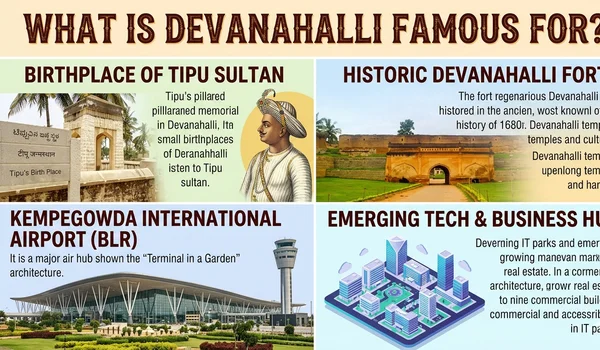
Devanahalli is famously the birthplace of Tipu Sultan, the "Tiger of Mysore". A short distance from the Devanahalli Fort lies an enclosed pavilion that serves as the official memorial marking the birthplace. The pavilion is a protected monument under the Archaeological Survey of India and a major destination for historical visitors to Devanahalli. For South Asian historians, military scholars, and cultural-heritage tourists, the Tipu Sultan birthplace anchor gives the corridor a deep historical positioning.
1791 — Lord Cornwallis and the Third Anglo-Mysore War
In 1791, during the Third Anglo-Mysore War, Lord Cornwallis laid siege to the fort. The siege resulted in the fort's capitulation and brought Devanahalli under British administration. The town remained a quiet administrative and agrarian centre through the colonial period and into the post-Independence Karnataka state, gradually losing its earlier defensive importance.
Colonial and Post-Independence Period — Quiet Agrarian Centuries
From the British administration onwards through the early post-Independence decades, Devanahalli was a quiet agrarian town in the broader Bengaluru Rural belt. The local economy ran on sericulture (silk production), grapes, mangoes, and the famous Devanahalli Pomelo — a unique citrus variety similar to a large grapefruit with sweet, juicy pulp grown only in the local agro-climate. The Devanahalli town centre, the fort, the Pomelo orchards, and the surrounding hobli villages formed the social geography for over a century with little change.
2008 — Kempegowda International Airport Opens, Transformation Begins
Kempegowda International Airport (KIA / BLR) opened in May 2008. The decision to locate Bangalore's new international airport at Devanahalli — chosen over rival sites — was the single biggest inflection point in the town's modern history. NH-207 connectivity was built out. The 400-acre Devanahalli Business Park was planned. The KIADB Aerospace SEZ took shape. Plotted developments and gated villa projects began appearing across the broader Devanahalli–Vijayapura belt. Land prices began their multi-decade move up from rural-village rates to airport-corridor rates.
2015–2024 — BIAL ITIR, Foxconn, Boeing, and the Corridor Build-Out
The BIAL ITIR (IT Investment Region) framework gave Devanahalli a ₹1,500 billion long-term investment envelope across IT, manufacturing, and aerospace clusters. The next decade brought sequential anchor announcements:
- KIADB Aerospace SEZ: Dedicated SEZ for aerospace anchors and aerospace-supplier units.
- Foxconn: 300-acre manufacturing plant in the corridor.
- Boeing: Largest facility outside the US, built in the Devanahalli aerospace belt.
- Amazon GCC: Captive technology centre.
- Walmart GCC: Captive technology centre.
- Devanahalli Business Park: 400-acre business park with phased occupancy.
- JW Marriott Prestige Golfshire Resort: Luxury hospitality anchor in the corridor.
2024–2026 — Plotted Township Launches and Bulwark The Woodland Forest
By 2024–2026, Devanahalli had become one of India's most-watched plotted township markets. BIAAPA-planned developments, gated villa communities, and 53-acre-scale township launches like Bulwark The Woodland Forest at Vijayapura brought a new tier of buyer to the corridor — North Bangalore IT professionals, NRI investors, aerospace-corridor employees, frequent flyers, and eco-luxury families. The Bulwark Group's 3 June 2026 launch of Bulwark The Woodland Forest is positioned at this 525-year arc — from the 1501 mud fort to the 2026 plotted township.
The Devanahalli Fort Today
The fort is a 20-acre granite-walled fortress with 12 semi-circular bastions and intricate archways. Inside the fort lies the Venugopala Swamy Temple — featuring intricate Vijayanagara-era pillar carvings comparable to the standards at Belur and Halebid. The Chandramouleeshvara and Siddheshwara temples also sit within the fort walls. The fort is a protected monument, an active worship site, and one of North Bangalore's most accessible historical destinations.
The Devanahalli Pomelo
Devanahalli lends its name to a unique variety of citrus fruit — the Devanahalli Pomelo. The Pomelo is similar to a large grapefruit but with a distinct sweet, juicy pulp profile. The variety is grown only in the Devanahalli area thanks to the unique agro-climate. The Pomelo has GI (Geographical Indication) registration recognition for its local origin, anchoring Devanahalli's identity as one of Karnataka's distinctive horticulture geographies.
Other Historical Anchors in the Fort and Town
- Venugopala Swamy Temple: Inside the Devanahalli Fort, with Vijayanagara-era pillar carvings comparable to Belur and Halebid.
- Chandramouleeshvara & Siddheshwara temples: Within the fort walls.
- Tipu Sultan birthplace pavilion: Protected monument under the Archaeological Survey of India.
- Nandi Hills (25–30 km): Historical fortress hill associated with the Mysore rulers.
- Bhoga Nandeeshwara Temple (Nandi): 9th-century ornate Chola–Hoysala temple anchoring the Nandi heritage circuit.
- Devanahalli town quarter: Old administrative blocks, traditional grain market, and local craft units.
From Mud Fort to Plotted Township — The 525-Year Arc
The arc from Malla Baire Gowda's 1501 mud fort to today's plotted township launches is a 525-year story. Bulwark The Woodland Forest's 53-acre plotted township at Vijayapura — the locality immediately east of Devanahalli town — continues that arc. The historical depth of the corridor pairs with the modern infrastructure story — KIA, BIAL ITIR, Foxconn, Boeing, Amazon, Walmart, and the upcoming Namma Metro Blue Line Phase 2B (Dec 2027) — to drive current plot demand. For buyers, this combination of deep historical anchor and structural modern infrastructure is one of the corridor's most differentiated value propositions.
Frequently Asked Questions about History of Devanahalli
1. Who built the Devanahalli Fort?
The original mud fort was built in 1501 by Malla Baire Gowda, a chieftain under the Vijayanagara Empire. The fort was reinforced with granite stone walls by the Mysore rulers Hyder Ali and Tipu Sultan after the Mysore Dalwais took the fort in 1749. The 12 semi-circular bastions and the granite walls visible today date primarily to that Hyder Ali–Tipu Sultan period.
2. Is Devanahalli really Tipu Sultan's birthplace?
Yes — Devanahalli is officially recognised as the birthplace of Tipu Sultan, the "Tiger of Mysore". A protected pavilion-style memorial marks the birthplace and sits a short distance from the Devanahalli Fort. The pavilion is a destination for visitors, historians, and cultural-heritage tourists.
3. When did Devanahalli become a major real-estate market?
Devanahalli's transformation from a quiet agrarian town into a major real-estate market began with the opening of Kempegowda International Airport in May 2008. The next phase came with the BIAL ITIR (₹1,500 billion), the KIADB Aerospace SEZ, the Foxconn 300-acre plant, Boeing's facility, and the Amazon/Walmart GCCs through 2015–2024. By 2024–2026, plotted township launches like Bulwark The Woodland Forest mark the locality's transition into an active 2026 residential market.
4. What is the Devanahalli Pomelo?
The Devanahalli Pomelo is a unique variety of citrus fruit similar to a large grapefruit. The fruit has sweet, juicy pulp with a distinct flavour profile. It is grown only in the Devanahalli area due to the unique agro-climate, and it carries GI (Geographical Indication) registration recognition for its local origin.
5. What is the Venugopala Swamy Temple at Devanahalli Fort known for?
The Venugopala Swamy Temple inside the Devanahalli Fort is known for its intricate Vijayanagara-era pillar carvings comparable to the standards seen at Belur and Halebid. The temple is an active worship site within the fort walls, alongside the Chandramouleeshvara and Siddheshwara temples.
6. How does the historical depth of Devanahalli matter to Bulwark The Woodland Forest buyers?
For buyers, the corridor's 525-year history — the 1501 mud fort, Tipu Sultan's birthplace, the Vijayanagara-era temples, the Devanahalli Pomelo — anchors a culturally differentiated identity vs. pure-suburb IT corridors that lack any historical depth. Combined with the airport-corridor modern infrastructure (KIA, BIAL ITIR, Foxconn, Boeing), this gives Vijayapura and the Bulwark The Woodland Forest plotted township a compounding identity advantage.
Bulwark The Woodland Forest Blog