History of Vijayapura

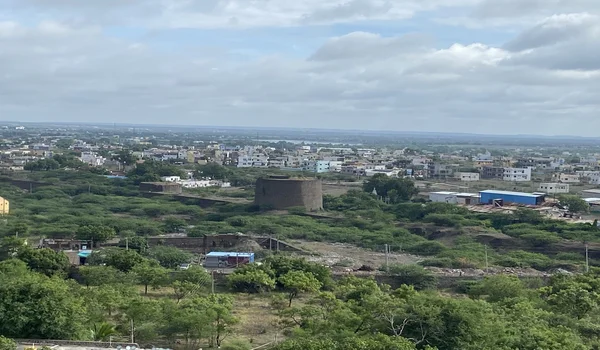
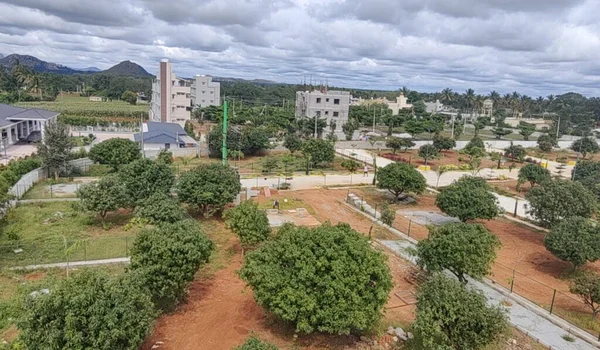
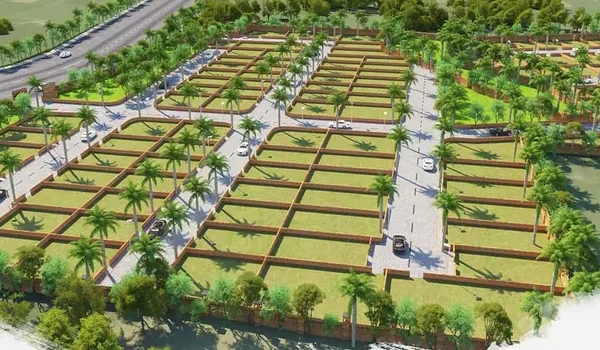
Vijayapura is a Vijayanagara-era silk-trading town in Devanahalli taluk, Bengaluru Rural district. The original name was Vadagenahalli — a name still used by older residents. For centuries the local economy ran on sericulture, ragi, grapes and mangoes. The arc since then has run from agrarian hamlet, through a quiet trading-town period under the British and post-Independence administration, to today's BIAAPA-planned growth band on the Kempegowda International Airport corridor. Bulwark The Woodland Forest sits within that next chapter — the 53-acre plotted township is among the new launches that mark Vijayapura's transition into a 2026 residential destination.
Origins of the Name — From Veda-gaana-halli to Vijayapura
The original name Vadagenahalli (also written as Vadigenahalli) is widely believed to be a corruption of Veda-gaana-halli — literally "the village where Vedic chants are sung". The naming hints at an early settlement built around a Brahmin pundit community, with the Nagareshwara Temple as the cultural anchor at the town centre. Over time the name shifted to Vijayapura — "city of victory" — reflecting the town's positioning under the Vijayanagara Empire as a victorious trade outpost. Locals still use both names; "Vadagenahalli" stays alive in older revenue documents, panchayat records and oral history.
Vijayanagara Era — Silk Trade and Temple Building
Under the Vijayanagara Empire (14th–17th century), Vijayapura emerged as a prosperous mercantile settlement. The Empire's patronage of sericulture turned the town into a recognised silk-trading hub for the broader Kolar–Devanahalli–Chikkaballapur belt. The Someshwara and Chennakeshava temples on the town's outskirts date to this era — fine examples of Vijayanagara-era stone craftsmanship with carved pillars, vimana superstructure, and Garbhagriha sanctums typical of that imperial school. The temple architecture, the silk-trade economy, and the Brahmin scholarly tradition formed the three foundational layers of Vijayapura's identity.
The Nagareshwara Temple — Hari-Hara Enclosure
The Nagareshwara Temple at the heart of Vijayapura town is roughly 200 years old in its current built form, though the site is older. Its rare feature is the Hari-Hara enclosure — the temple houses shrines of both Lord Nagareshwara (Shiva) and Lord AdiNarayana (Vishnu) within a single sanctum. The Hari-Hara format is uncommon in South India and reflects a syncretic religious tradition that flourished briefly under the Vijayanagara revival. The temple remains a working shrine and is the daily-worship anchor for the older town centre.
Colonial and Pre-Independence Period — Quiet Agrarian Town
Through the British era and the early decades after Independence, Vijayapura was a quiet agrarian and sericulture town in the Bengaluru Rural belt. The Kolar–Bangalore arterial road passed nearby. The Vijayapura Railway Station on the Yelahanka–Chikkaballapura line — opened in the broader-gauge era — served the agrarian and silk trade. The economy stayed close to the land: ragi, grapes, mangoes, and the silk that gave the town its "Silk City" nickname within Bengaluru Rural district.
Post-Independence to 2008 — Sericulture Steady, Real Estate Quiet
From 1947 to roughly 2008, Vijayapura's growth was gentle. The town remained a Devanahalli-taluk hobli with sericulture and small-scale trade as the economic engine. Land was inexpensive. Plotted developments were rare, and most transactions were rural-buyer driven. The bigger story for the broader corridor in this period was the planning and approval of the Kempegowda International Airport (BIAL) at Devanahalli — a decision that would eventually transform Vijayapura's positioning, though that transformation lay decades in the future.
2008–2015 — Kempegowda International Airport Opens, Corridor Begins to Shift
Kempegowda International Airport (KIA / BLR) opened in May 2008. The Devanahalli corridor — Vijayapura included — began its transition from an agrarian rural belt to a strategically positioned airport-economy band. NH-207 connectivity improved. The 400-acre Devanahalli Business Park was planned. Initial plotted developments and gated villa projects appeared along the broader Devanahalli–Vijayapura belt. Real estate rates moved up gradually but stayed well below the IT-corridor norms of South Bangalore and Whitefield.
2015–2020 — BIAL ITIR and the Aerospace SEZ Take Shape
The BIAL ITIR (IT Investment Region) framework gave Devanahalli a ₹1,500 billion long-term investment envelope. The KIADB Aerospace SEZ at Devanahalli began build-out, drawing aerospace anchors. Plotted developments along the Vijayapura–Devanahalli stretch picked up pace. Vijayapura's top-10 AQI ranking in India was reported in this period, giving the locality a credible eco-luxury angle alongside the airport-economy story. Sericulture continued in the older town centre even as new plotted layouts appeared on the periphery.
2020–2024 — Foxconn, Boeing, Amazon, Walmart Land on the Corridor
The corridor transformation accelerated. Foxconn announced its 300-acre manufacturing plant at Devanahalli. Boeing built its largest facility outside the US in the corridor. Amazon GCC and Walmart GCC set up captive technology centres. The Devanahalli Business Park crossed key occupancy milestones. Vijayapura's plotted rates climbed steadily — from the ₹1,350-per-sqft band of early-2010s villages to a ₹1,350–4,500+ band across plotted layouts of varying quality. The locality moved from rural sericulture town into a North Bangalore real-estate growth zone.
2024–2026 — Plotted Township Launches Arrive
By 2024–2026, Vijayapura had become one of North Bangalore's most-watched plotted township markets. BIAAPA-planned developments, gated villa launches, and 53-acre-scale township launches like Bulwark The Woodland Forest brought a new tier of buyer to the locality — North Bangalore IT professionals, NRI investors, aerospace-corridor employees, and homebuyers seeking the top-10 AQI advantage. The 3 June 2026 launch of Bulwark The Woodland Forest sits at this inflection point.
2026 Onwards — What's Driving the Next Wave
- Namma Metro Blue Line Phase 2B (Dec 2027): The KR Puram–KIA stretch puts Bagalur Cross and Bettahalasuru metro stations 20–25 minutes by road from Vijayapura.
- Bengaluru Suburban Railway (Sampige Line): KSR Bengaluru to Devanahalli connection under build-out — a 5 km branch to KIA Halt is planned.
- BIAL ITIR build-out continues: The ₹1,500 billion investment envelope still has multi-decade build-out runway across IT, manufacturing, and aerospace clusters.
- Plotted township scale-up: The 53-acre Bulwark The Woodland Forest, gated villa communities, and other 2026–2028 pre-launches add buyer-built-villa supply to the locality.
- Eco-luxury positioning: Vijayapura's top-10 AQI ranking remains a structural differentiator vs. central Bangalore corridors with denser industrial and vehicular load.
Cultural Anchors That Remain
- Nagareshwara Temple: The 200-year-old Hari-Hara enclosure in the town centre — still the working daily-worship anchor.
- Someshwara & Chennakeshava Temples: Vijayanagara-era stone shrines on the outskirts — culturally protected sites with seasonal festivals.
- Shree Nakoda Avati 108 Jain Temple: A serene Jain pilgrimage site referred to as Shri Shri Nakoda Avanti 108 Parshwanath Jain Tirth Dham on NH-44 nearby.
- Sri Hattilakamma Shree Kanaka Durgamma Temple: A revered local shrine in the Harohalli region of Vijayapura.
- Old town markets and sericulture units: Pockets of traditional silk-trade activity still continue in the older town quarters, side by side with new plotted layouts.
Vijayapura's Place in Modern Bangalore
Vijayapura today is one of North Bangalore's most carefully-watched 2026 residential growth bands. The locality combines a rare top-10 AQI environment with airport-corridor proximity, BIAAPA planning discipline, and active plotted township supply. The "Silk City" heritage and the Vijayanagara-era temples give the locality a culturally differentiated identity vs. newer suburbs that lack any historical anchor. For buyers at Bulwark The Woodland Forest, this depth of history is not background colour — it is part of the locality's compounding identity advantage that pure-suburb addresses in the IT corridors cannot manufacture.
Frequently Asked Questions about Vijayapura History
1. What was the original name of Vijayapura?
The original name was Vadagenahalli (also written Vadigenahalli), widely believed to be a corruption of Veda-gaana-halli — "the village where Vedic chants are sung". The name shifted to Vijayapura under the Vijayanagara Empire's positioning as a victorious trade outpost. Local revenue records and oral history still use both names interchangeably.
2. Why is Vijayapura called the "Silk City"?
Under the Vijayanagara Empire, the area's sericulture economy made Vijayapura a recognised silk-trading hub for the Kolar–Devanahalli–Chikkaballapur belt. The Silk City nickname stuck through the colonial era, post-Independence period, and into modern times. Sericulture units still operate in pockets of the older town centre even as new plotted layouts come up on the periphery.
3. What is the Hari-Hara enclosure at the Nagareshwara Temple?
The Nagareshwara Temple at the heart of Vijayapura town houses shrines of both Lord Nagareshwara (Shiva) and Lord AdiNarayana (Vishnu) within a single sanctum — the rare Hari-Hara format. The format is uncommon in South India and reflects a syncretic religious tradition that briefly flourished under the Vijayanagara revival. The temple is roughly 200 years old in its current built form and remains an active worship anchor.
4. When did Vijayapura's real estate market start moving up?
The shift began after Kempegowda International Airport opened in May 2008. The pace accelerated after 2015 with the BIAL ITIR framework, the KIADB Aerospace SEZ, and Devanahalli Business Park build-out. Foxconn, Boeing, Amazon GCC and Walmart GCC anchored the next wave (2020–2024). By 2024–2026, plotted township launches like Bulwark The Woodland Forest pushed Vijayapura into the active North Bangalore residential market.
5. What administrative jurisdiction does Vijayapura come under?
Vijayapura is a hobli in Devanahalli taluk, Bengaluru Rural district, Karnataka. PIN code 562135. The planning authority for new developments is BIAAPA (Bengaluru International Airport Area Planning Authority), which is typical for the broader Devanahalli corridor. The locality sits ~37 km north of central Bengaluru via NH-44.
6. What's coming next for Vijayapura?
The Namma Metro Blue Line Phase 2B (Dec 2027) brings metro access via Bagalur Cross and Bettahalasuru stations 20–25 minutes by road from Vijayapura. The Bengaluru Suburban Railway Sampige Line is under build-out. The BIAL ITIR build-out continues across IT, manufacturing and aerospace clusters. Plotted township launches at the 53-acre scale (Bulwark The Woodland Forest, newly launched June 2026) and gated villa supply continue to add residential inventory through 2028.
Bulwark The Woodland Forest Blog