Property Documents Explained: Sale Deed, Title Deed & Khata 2026
Document roles verified against the Registration Act and Karnataka Khata rules, July 2026.
Plot paperwork confuses buyers because several documents sound similar but do very different jobs. A sale deed transfers ownership; a title deed proves it; a mother deed anchors its history; and a Khata records who pays the tax — it is not proof of ownership at all. Getting these straight is the difference between a confident purchase and a costly mistake. This guide explains each document, what it proves, and how they fit together, so you can read the file on a plot in Vijayapura or anywhere in Karnataka without second-guessing.
The single most common misunderstanding is treating a Khata as ownership. It is not. Ownership flows from the registered sale deed and the chain of deeds behind it; the Khata sits alongside for tax and civic purposes. Keep that distinction and the rest of the paperwork falls into place.
Property Documents at a Glance 2026
| Document | What it is | What it proves |
| Sale deed | Registered transfer from seller to buyer | Ownership passed to you |
| Title deed | General term for any ownership document | Who owns the property |
| Mother deed | Earliest parent document of the title | Origin of the title chain |
| Encumbrance certificate | Record of registered transactions | Free of loans / liens |
| Khata (A / e-Khata) | Municipal tax account | Who pays property tax (not ownership) |
| DC conversion | Order converting land use | Land is non-agricultural / residential |
Indicative, as of July 2026 — document names and formats follow Karnataka practice; confirm the exact set for your plot with an advocate and the sub-registrar.
Sale Deed — The Document That Transfers Ownership
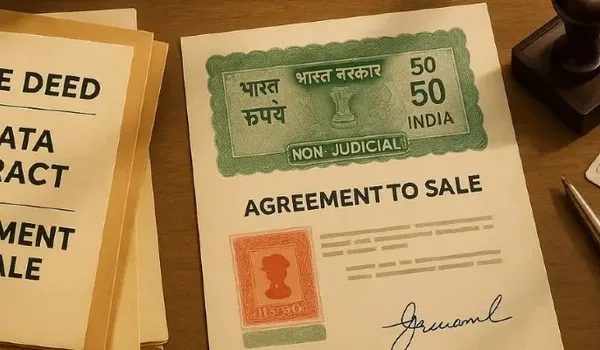
The sale deed is the registered instrument that legally moves a property from the seller to the buyer for a price. It records the parties, the plot schedule, the consideration and the date, and once registered at the sub-registrar it becomes your primary proof of ownership. Everything else supports it. The plot registration process guide covers how a sale deed is executed and registered.
Title Deed & Mother Deed — Proving and Tracing Ownership
"Title deed" is a general term for any document that establishes who owns a property — a sale deed, a gift deed or a partition deed can each serve as a title deed. The mother deed, or parent document, is the earliest available deed from which the title flows; it anchors the chain. To confirm clear title, you trace the mother deed forward through every subsequent transfer for at least 30 years, checking there is no gap. That chain, cross-checked against the encumbrance certificate, is what an advocate reads before giving a title opinion — see the plot due-diligence checklist.
Encumbrance Certificate & Tax Receipts — The Supporting Record
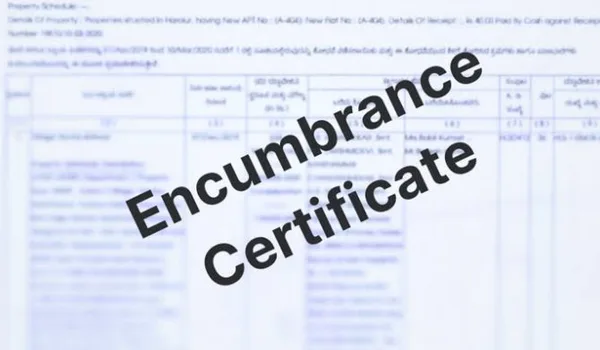
The encumbrance certificate lists the registered transactions on a plot, so it confirms the title chain and shows whether a loan or lien is live. The latest property tax paid receipt shows the account is current with no arrears. Neither proves ownership by itself, but together they corroborate the sale deed and expose problems the deed alone would not reveal. Our encumbrance certificate guide explains how to pull one online.
Khata — Why It Is Not Title
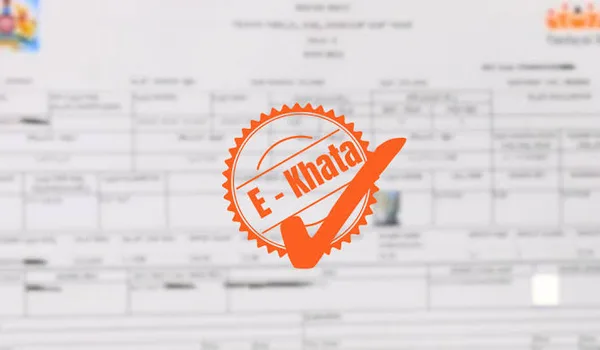
A Khata is the account a municipal body or panchayat keeps to record a property and the person liable for its tax. An A-Khata marks a legal, compliant property; a B-Khata flags an irregular one; an e-Khata is the digitised version of the record. A Khata identifies the tax-payer and is essential for civic services and for a clean transfer — but it does not, on its own, prove ownership. You need the Khata and the title. The e-Khata and Khata transfer guide covers how the Khata moves to your name after registration.
The Document Set — Bulwark The Woodland Forest

Bulwark The Woodland Forest is a 53-acre plotted township by Bulwark Group in Vijayapura, Devanahalli, registered under Karnataka RERA as PRM/KA/RERA/1251/446/PR/090626/008712. In an approved layout the developer assembles the document set, and the buyer receives a clean chain rather than reconstructing one.
- Sale deed: registered per plot at the Devanahalli sub-registrar
- Title chain: mother deed and prior deeds held and verifiable
- Approvals: DC conversion, sanctioned layout and RERA registration on record
- Khata: moves to the buyer's name after registration in the approved layout
Review the master plan and current price list, then book a site visit to go through the papers with the team.
Documents to Collect Before You Buy
- 1. Sale deed & mother deed: the registered transfer and the parent document.
- 2. Title chain: every deed for 30 years, unbroken.
- 3. Encumbrance certificate: matched to the chain, no live mortgage.
- 4. Khata & tax receipt: A-Khata or e-Khata plus current tax.
- 5. Approvals: DC conversion, sanctioned layout and RERA registration.
Frequently Asked Questions
1. What is the difference between a sale deed and a title deed?
A sale deed is the specific registered document that transfers ownership of a property from seller to buyer. Title deed is a general term for any document that establishes ownership - a sale deed, gift deed or partition deed can each be a title deed. Your registered sale deed is your main title deed after purchase.
2. What is a mother deed?
A mother deed, or parent document, is the earliest available deed that traces the origin of a property's title, from which all later transfers flow. It anchors the title chain, and buyers use it with the successive deeds to confirm an unbroken 30-year history of ownership.
3. Is a Khata the same as a title document?
No. A Khata is a municipal or panchayat account that records a property for tax purposes and identifies who is liable to pay it. It is not proof of ownership. Title comes from the registered sale deed and the chain behind it; the Khata sits alongside, not in place of, the title.
4. What is the difference between A-Khata and B-Khata?
An A-Khata records a property that is legal and compliant with approvals and tax, so it can be transferred, financed and built on cleanly. A B-Khata flags an irregular or pending property that is harder to finance and to build on. An e-Khata is the digitised Khata record.
5. Which documents prove ownership of a plot?
Ownership is proven by the registered sale deed backed by the mother deed and the title chain, supported by the encumbrance certificate, the Khata and tax paid receipts, and the approvals such as DC conversion and the sanctioned layout. Together these show clear, transferable title.
6. Do I need the original documents or are copies enough?
For registration and for a home or plot loan, originals of the sale deed and the supporting title documents are needed, and the bank retains the originals until the loan is closed. For due diligence before buying, certified copies and the digital records from Kaveri are enough to verify the chain.
Conclusion
Read a plot's paperwork as a set with clear roles: the sale deed transfers ownership, the title and mother deeds prove and trace it, the encumbrance certificate and tax receipts corroborate it, and the Khata records the tax — without ever standing in for title. The costly mistakes almost always come from confusing these, especially treating a Khata as ownership. Assemble the full set, verify the chain with an advocate, and on an approved RERA layout let the developer's clean file do most of the work. To go through the documents on a real plot, book a site visit with the team.
Bulwark The Woodland Forest Blog