Encumbrance Certificate (EC) in Karnataka: How to Get It Online 2026
Process verified against Kaveri Online Services, Karnataka Department of Stamps and Registration, July 2026.
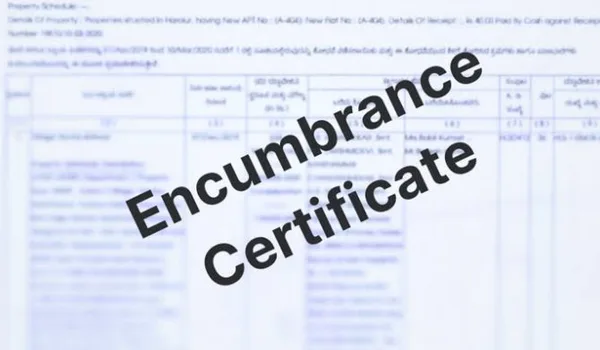
An encumbrance certificate, or EC, is the document that tells you whether a plot is free of loans and legal charges. It lists the registered transactions on a property — sales, mortgages, gifts and releases — over a period you choose, so a clean EC is one of the strongest signals that the seller can transfer clear title. In Karnataka you can now pull most ECs online through the state's Kaveri portal in a few minutes. This guide explains what an EC shows, the difference between Form 15 and Form 16, how to apply online, and how to read the result before you buy a plot in Vijayapura or anywhere in the state.
Every plot buyer and every lender asks for a fresh EC, because it is the quickest way to catch a live mortgage or a missing link in the ownership chain. It is not the only check — it captures registered transactions only — but it is a fast, low-cost one you should always run.
Form 15 vs Form 16 — What the EC Returns
| Item | Form 15 EC | Form 16 EC |
| When issued | Registered transactions found for the period | No registered transactions found (nil) |
| What it lists | Each deed, party, date and nature | A statement that the record is clear |
| Also called | EC with transactions | Nil encumbrance certificate |
| Common use | Confirm the title chain & loan status | Confirm a period with no activity |
Indicative, as of July 2026 — forms and fees are set by the Department of Stamps and Registration; confirm the current fee and format on the Kaveri portal.
What an EC Does — and Does Not — Show
An EC reflects only what is on the registration record. It shows registered sale deeds, mortgages, gift and partition deeds, and the releases that close them out. It does not capture an unregistered agreement to sell, an oral mortgage, unpaid property tax, or a pending court case. That is why an EC sits inside a wider check — pair it with the title chain, the latest tax paid receipt, the approvals and a legal opinion. Our plot due-diligence checklist shows where the EC fits in the full read.
How to Apply for an EC Online on Kaveri
Karnataka's Kaveri Online Services portal, run by the Department of Stamps and Registration, lets you request an EC without a trip to the sub-registrar for most recent records.
- 1. Register: create an account on Kaveri Online Services with your mobile and email.
- 2. Choose the service: select the encumbrance certificate option under online EC.
- 3. Enter property details: district, taluk, hobli, village and the survey or property number, plus the period you want searched.
- 4. Pay the fee online: the fee is nominal and rises with the number of years searched.
- 5. Download: receive the digitally signed EC — Form 15 if transactions exist, Form 16 if the record is nil.
Very old entries that were never digitised may not appear online; for those, apply at the jurisdictional sub-registrar office with the property details. Always match the survey or property number exactly — a wrong number returns the wrong record.
How to Read an EC Before Buying
Open the EC and check three things. First, that every deed in your title chain appears in order, with no gap. Second, that any mortgage entry is followed by a release — an open mortgage means the plot still secures a loan. Third, that the current seller is the last recorded owner. If a transaction is missing, or a mortgage has no release, stop and get it explained in writing before you pay. Read it alongside the sale deed and the property documents guide so the names and dates reconcile.
EC & Registration — The Order of Steps
You pull an EC before purchase to confirm clear title, and again just before registration to catch any last-minute charge. After you register your sale deed, that transaction itself becomes an entry on the property's future EC. So the EC both protects your purchase and records it. The plot registration process guide covers what happens at the sub-registrar after your EC comes back clean.
Example — EC Check on a Plot at Bulwark The Woodland Forest

Bulwark The Woodland Forest is a 53-acre plotted township by Bulwark Group in Vijayapura, Devanahalli, registered under Karnataka RERA as PRM/KA/RERA/1251/446/PR/090626/008712. In an approved layout like this, the developer can share the encumbrance position for the parent land, and each buyer pulls a fresh EC for their specific plot before registration.
- Parent land EC: confirms the layout land is free of undisclosed charges
- Plot-level EC: pulled per plot before registration, matched to the plot schedule
- Post-registration: your sale deed becomes the newest entry on that plot's EC
See the current price list and book a site visit to review the plot and its papers together.
Frequently Asked Questions
1. What is an encumbrance certificate (EC)?
An encumbrance certificate is an official record of the registered transactions on a property over a period - sales, mortgages, gifts and releases. It shows whether the property carries a live loan or lien, and is used to confirm clear title before buying a plot or applying for a loan.
2. How do I get an EC online in Karnataka?
Register on the Kaveri Online Services portal of the Karnataka Department of Stamps and Registration, choose the encumbrance certificate service, enter the property and period details, pay the fee online, and download the digitally signed EC. Older records may need an offline application at the sub-registrar office.
3. What is the difference between Form 15 and Form 16 EC?
A Form 15 EC is issued when registered transactions exist on the property for the searched period and lists each of them. A Form 16, or nil encumbrance certificate, is issued when no registered transactions are found for that period. Both are valid outputs of the same search.
4. How many years should an EC cover?
For a plot purchase, pull an EC covering at least the last 13 to 30 years, ideally matching the period of your title chain, so every registered deed in the chain appears. Banks often ask for an EC covering a defined recent period as part of the loan file.
5. Does an EC show all charges on a property?
An EC shows only registered transactions. It does not capture unregistered agreements, oral mortgages, tax dues or pending litigation. So an EC is a necessary check but not the only one - pair it with the title chain, tax receipts and a legal opinion.
6. Is a digitally signed EC from Kaveri valid?
Yes. The encumbrance certificate downloaded from the Kaveri Online Services portal is digitally signed by the Department of Stamps and Registration and is accepted for property and loan purposes. You can verify its authenticity through the portal's verification option.
Conclusion
An encumbrance certificate is the cheapest, fastest insurance a plot buyer can pull. It confirms the ownership chain, exposes a live mortgage, and — once you register — records your own purchase for the next buyer. Get it online from Kaveri, read it against the title chain, and treat any open mortgage or missing deed as a stop until it is explained in writing. On an approved, RERA-registered layout the developer already holds the parent-land position, so your plot-level EC is a quick confirmation. To review a plot and its papers together, book a site visit.
Bulwark The Woodland Forest Blog