DC Conversion: Agricultural to Residential Land in Karnataka 2026
Process described per the Karnataka Land Revenue Act and the state land-conversion system, July 2026 — confirm the current flow with the tahsildar or Deputy Commissioner's office.
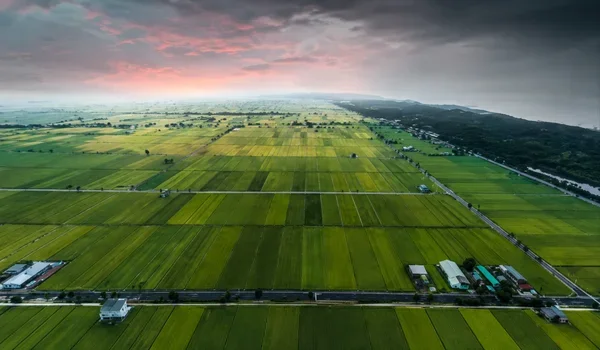
In Karnataka, farmland stays farmland until the government says otherwise. Before agricultural land can carry a house or a plotted layout, its use has to be changed from agricultural to non-agricultural — the step everyone calls DC conversion, after the Deputy Commissioner who grants it. The output is a single, decisive document: the conversion order. For anyone buying a plot in Vijayapura, Devanahalli or the wider Bengaluru Rural belt, understanding this step is what separates a legal residential plot from a piece of agricultural land that cannot be built on. This guide explains what conversion is, how the process runs, and what a buyer must verify.
Most buyers never file a conversion themselves — on a sanctioned layout the developer has already converted the parent land. But every buyer should know what the order looks like and why it matters, because a plot sold out of unconverted farmland is a title problem waiting to surface at the bank or the sub-registrar. Read this alongside the plot due-diligence checklist, where the conversion order sits near the top of the papers to check.
DC Conversion 2026 — At a Glance
| Item | What it means |
| What it is | Change of land use from agricultural to non-agricultural (residential) |
| Granted by | Deputy Commissioner / competent revenue authority |
| Applied through | Karnataka's online land-conversion service |
| Key papers | RTC (Pahani), mutation extract, survey sketch, tax receipts, title deeds |
| Output | DC conversion order — proof the land is legally residential |
| Shortcut | Deemed conversion where land is in a master-plan residential zone |
Indicative, as of July 2026 — conversion rules, fees and the online workflow are set by the state and revised periodically; confirm the current position with the revenue authority.
Why Conversion Is Needed
Land in India is classified by use, and agricultural land is meant for farming. Putting houses or a layout on it without changing the use is unauthorised — the plot cannot get a clean residential Khata, banks hesitate to lend against it, and the owner can face penalties or demolition of unauthorised structures. Conversion resets the land's legal use to residential, which is what lets a Khata, building approval and a proper title chain follow. This is why a DC conversion order is a title document, not a formality.
How the Conversion Process Works
The owner applies to the Deputy Commissioner or the competent revenue officer through Karnataka's online land-conversion service. The application carries the RTC or Pahani, the mutation extract, a survey sketch, the latest land tax receipts and the title deeds. The authority checks that the land is free of dispute and that the local master plan or planning zone permits residential use, seeks any departmental clearances, and, on approval and payment of the conversion fee, issues the conversion order. The order specifies the land, the permitted use and the extent converted.
Documents and Fees
The core set is the RTC, the mutation register extract showing ownership, a tippani or survey map, tax-paid receipts, an encumbrance certificate and the title deeds, along with an affidavit and the prescribed application. The conversion fee depends on the area and the proposed use — residential is charged at a lower rate than commercial or industrial — and the government revises it periodically. Take any number as indicative and confirm the current fee with the tahsildar before budgeting; verifying the land's own records first is covered in our land records guide.
Deemed Conversion in Master-Plan Zones
Karnataka has moved to ease conversion where land already sits in the residential zone of an approved master plan or a local planning area. In those zones the land can be treated as converted — deemed conversion — on payment of the applicable charge, without the full separate process. This shortens timelines on the airport corridor, where much of the growth land falls inside planned zones. The exact scope depends on the zone and the latest notification, so confirm whether a specific survey number qualifies with the planning authority.
Conversion Example — Bulwark The Woodland Forest
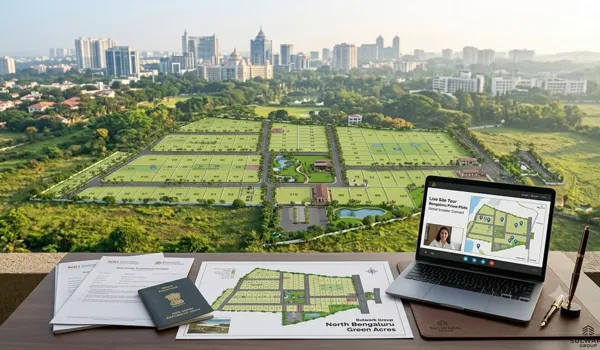
Bulwark The Woodland Forest is a 53-acre plotted township by Bulwark Group in Vijayapura, Devanahalli, registered under Karnataka RERA as PRM/KA/RERA/1251/446/PR/090626/008712. On a layout like this the parent land is already converted to residential and sanctioned as a plotted development, so a buyer does not apply for conversion — the job is to verify that the order exists and matches the plot.
- Land use: converted to non-agricultural residential for the whole parcel
- Buyer's check: see the DC conversion order for the parent survey numbers
- Alongside: sanctioned layout plan, RERA registration and clear title chain
- Result: a plot that can carry a residential Khata and a bank loan
Ask for the approval set and check the current price list, then book a site visit to see the documents in person.
Frequently Asked Questions
1. What is DC conversion in Karnataka?
DC conversion is the legal change of land use from agricultural to non-agricultural, such as residential, granted under the Karnataka Land Revenue Act. Farmland cannot be used for houses or plotted layouts until it is converted, and the conversion order is the document that proves the land may lawfully be used for residential purposes.
2. Why does DC conversion matter to a plot buyer?
A plot carved out of unconverted agricultural land is not legally residential, cannot get a proper Khata, is hard to finance and risks penalties. Buying a converted plot with a valid DC conversion order protects your title, your loan and your resale, so it is one of the first documents to verify.
3. How do I apply for DC conversion in Karnataka?
Conversion is applied for through the state's online land conversion service to the Deputy Commissioner or the competent revenue authority. You submit the RTC, mutation extract, survey sketch, tax receipts and title papers, the land is checked against the zoning of the local master plan, the conversion fee is paid, and the conversion order is issued if it is approved.
4. What is deemed conversion?
Where land already falls within the residential zone of an approved master plan or local planning area, Karnataka rules allow it to be treated as converted without the full separate process, on payment of the applicable charge. The exact scope of deemed conversion depends on the zone and the current notification, so confirm it with the local authority.
5. How much does DC conversion cost?
The conversion fee is charged on the area and the proposed use and is revised by the government from time to time. Residential conversion costs less than commercial or industrial. Treat any figure as indicative and confirm the current rate with the tahsildar or Deputy Commissioner's office before you budget.
6. Do I still need DC conversion if the plot is in a layout?
If the plot is in a properly sanctioned layout, the conversion has usually already been done by the developer for the whole parcel. You do not re-apply, but you should still see the DC conversion order for the parent land as part of your due diligence, along with the sanctioned plan and RERA registration.
Conclusion
DC conversion is the line between farmland and a legal residential plot in Karnataka. The process runs through the Deputy Commissioner and the state's online service, turns on the land's zoning under the master plan, and ends in a conversion order that a buyer must see. On the airport corridor much of the growth land is already converted or eligible for deemed conversion inside planned zones, and on a sanctioned layout the developer has done this for the whole parcel. Your job as a buyer is to verify the order alongside the layout plan and RERA registration. To review a real, converted layout's papers, book a site visit.
Bulwark The Woodland Forest Blog