NRI Guide to Buying Plots in Bangalore 2026
Rules stated per FEMA and RBI guidance for NRI property purchase, July 2026 — confirm the current position with your bank and a chartered accountant.
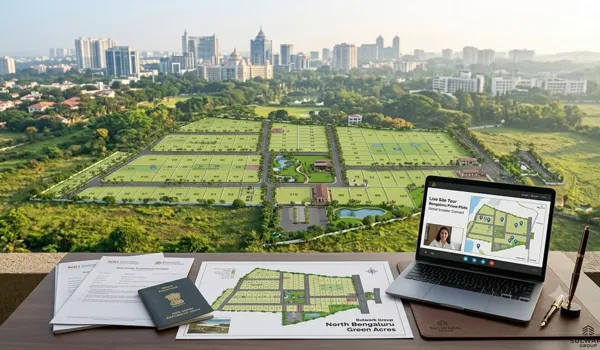
For a non-resident Indian, a plot on Bengaluru's airport corridor is one of the simplest assets to hold — land needs no tenant, no fit-out and little upkeep, and it tracks the growth around Kempegowda International Airport. The rules that govern an NRI purchase are set by FEMA and the Reserve Bank of India, and they are clear: an NRI can own a residential plot, but must pay through the right account and buy only converted, non-agricultural land. This guide walks through what you can buy, how to pay, how to register from abroad, and the tax you should plan for, so a plot in Vijayapura, Devanahalli or elsewhere on the corridor is bought cleanly.
The good news for an NRI is that a residential plot sits squarely inside what FEMA allows — no special approval is needed, and you can hold any number of such properties. The care goes into three things: keeping the money trail through an NRE, NRO or FCNR account, using a registered power of attorney if you cannot travel, and getting the TDS and repatriation paperwork right. Get those correct and the purchase itself is the same five-step registration any resident buyer follows.
NRI Plot Purchase 2026 — Quick Rules
| Topic | Rule for an NRI / OCI |
| Can buy | Residential & commercial property, including a converted residential plot — no limit on number |
| Cannot buy | Agricultural land, farmhouse or plantation property |
| Payment | Rupees through banking channels — NRE, NRO or FCNR(B) account, or inward remittance |
| Registration | In person, or through a registered power of attorney |
| Repatriation | Up to USD 1 million per financial year from NRO; sale proceeds of up to two residential properties, subject to conditions |
| Loan | Plot / composite loan from Indian banks, repaid from NRE or NRO |
Indicative, as of July 2026 — FEMA and RBI rules and repatriation limits can change; confirm the current position with your bank before you remit.
What an NRI Can and Cannot Buy
FEMA lets an NRI or OCI cardholder buy residential and commercial immovable property freely, and a sanctioned residential plot is residential property. What an NRI cannot buy is agricultural land, a farmhouse or a plantation. This single line decides your shortlist on the airport corridor: buy only a plot that has been converted to non-agricultural residential use and sits in an approved layout. Ask for the DC conversion order and the sanctioned plan before you commit — our DC conversion guide explains why that document matters.
How to Pay — NRE, NRO and FCNR Accounts
The purchase money must move in Indian rupees through normal banking channels. You can fund it from an NRE account (foreign earnings, freely repatriable), an NRO account (India-sourced income, limited repatriation) or an FCNR(B) deposit, or by fresh inward remittance from abroad. What you cannot do is pay in foreign currency cash or by traveller's cheque. Keep every transfer traceable to one of these accounts — a clean money trail is what makes a later sale and repatriation straightforward.
Power of Attorney: Buying from Abroad
Most NRIs cannot fly in for the registration, so they appoint a trusted relative or friend in India through a power of attorney to sign the agreement and appear at the sub-registrar. Make the PoA specific to the transaction, not a broad general authority, and name exactly what the holder may do. If you execute it abroad, get it attested at the Indian consulate and then adjudicated and stamped in India within the required period. A registered, specific PoA is what lets the plot registration happen with you overseas.
TDS, Taxes and Repatriation
Tax touches an NRI purchase at two points. On buying, if you purchase from a resident seller for 50 lakh or more, you deduct 1% TDS and deposit it; if the seller is another NRI, you must deduct TDS on their gain under section 195. On selling later, your own capital gain is taxable in India — our capital gains guide covers the rates and exemptions. Sale proceeds can be repatriated within the NRO limit of USD 1 million a financial year, and for up to two residential properties, subject to tax being paid and the funds being properly sourced.
Home Loans for NRIs
An NRI can fund a plot with a loan from an Indian bank or housing finance company. The lender assesses overseas income, asks for KYC, passport, visa or OCI card, PAN and account details, and usually keeps the funding share and tenure a little more conservative than for a resident. The loan is disbursed and the EMI repaid in rupees through your NRE or NRO account. How plot and composite loans work in general is set out in our plot loan guide.
NRI Purchase Example — Bulwark The Woodland Forest

Bulwark The Woodland Forest is a 53-acre plotted township by Bulwark Group in Vijayapura, Devanahalli, registered under Karnataka RERA as PRM/KA/RERA/1251/446/PR/090626/008712. Because the layout is converted, sanctioned and RERA-registered, it fits an NRI's shortlist directly — the land is non-agricultural residential, and the developer supplies the approval set an overseas buyer would otherwise assemble.
- Eligible asset: a DC-converted residential plot, not agricultural land
- Payment: from an NRE / NRO / FCNR account through banking channels
- Registration: in person or via a registered, specific power of attorney at the Devanahalli sub-registrar
- Papers ready: DC conversion order, sanctioned layout and RERA registration from the developer
See the current price list and cost sheet to size the remittance, then get in touch to plan an NRI-friendly booking.
Frequently Asked Questions
1. Can an NRI buy a plot in Bangalore?
Yes. Under FEMA an NRI or OCI can buy residential and commercial immovable property in India, which includes a converted residential plot in a sanctioned layout. There is no cap on the number of such properties. The only bar is on agricultural land, farmhouses and plantation property, which NRIs cannot buy.
2. Can NRIs buy agricultural land in Karnataka?
No. NRIs and OCIs are not permitted to buy agricultural land, a farmhouse or plantation property in India under current FEMA rules. This is why an NRI should buy only a DC-converted, non-agricultural residential plot in an approved layout, and verify the conversion order before paying.
3. How should an NRI pay for a plot in India?
Payment must be made in Indian rupees through normal banking channels, using funds held in an NRE, NRO or FCNR(B) account, or by inward remittance. Payment in foreign currency notes or by traveller's cheque is not allowed for a property purchase.
4. Can an NRI buy a plot without coming to India?
Yes. An NRI who cannot travel can appoint a trusted person in India through a registered power of attorney to sign the sale agreement and complete the registration at the sub-registrar. The power of attorney should be specific, properly executed and, if made abroad, attested at the Indian consulate and adjudicated in India.
5. Is TDS applicable when an NRI buys a plot?
When you buy from a resident seller and the value is 50 lakh or more, you deduct 1% TDS under section 194-IA and deposit it. If the seller is another NRI, the buyer must deduct TDS on the seller's capital gain at the applicable rate under section 195. Confirm the current rate and the exact duty with a chartered accountant before you pay the seller.
6. Can an NRI take a home loan to buy a plot?
Yes. Indian banks and housing finance companies offer plot and composite loans to NRIs against income and KYC documents. The loan is disbursed and repaid in rupees through the NRE or NRO account, and the funding share and tenure are usually a little more conservative than for a resident borrower.
Conclusion
Buying a plot in Bangalore as an NRI is well within FEMA's rules: hold any number of converted residential plots, pay through an NRE, NRO or FCNR account, and register in person or through a specific power of attorney. Keep the money trail clean, avoid agricultural land, handle the 1% TDS, and plan for capital gains tax when you sell. On a sanctioned, RERA-registered layout the developer supplies the approval set, so an overseas buyer mostly has to verify, remit and appoint a PoA. To size a plot against a real cost sheet and plan an NRI-friendly booking, get in touch with the team.
Bulwark The Woodland Forest Blog